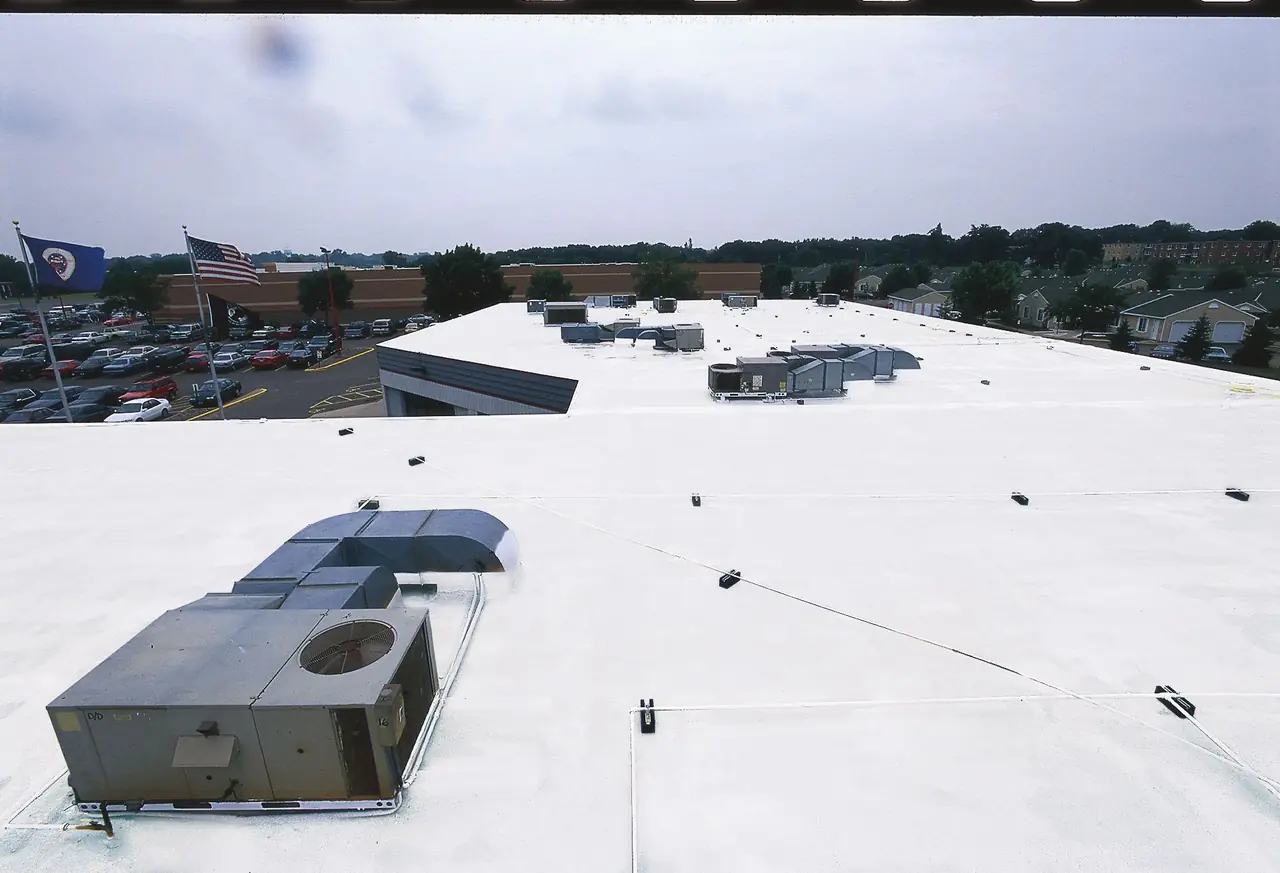
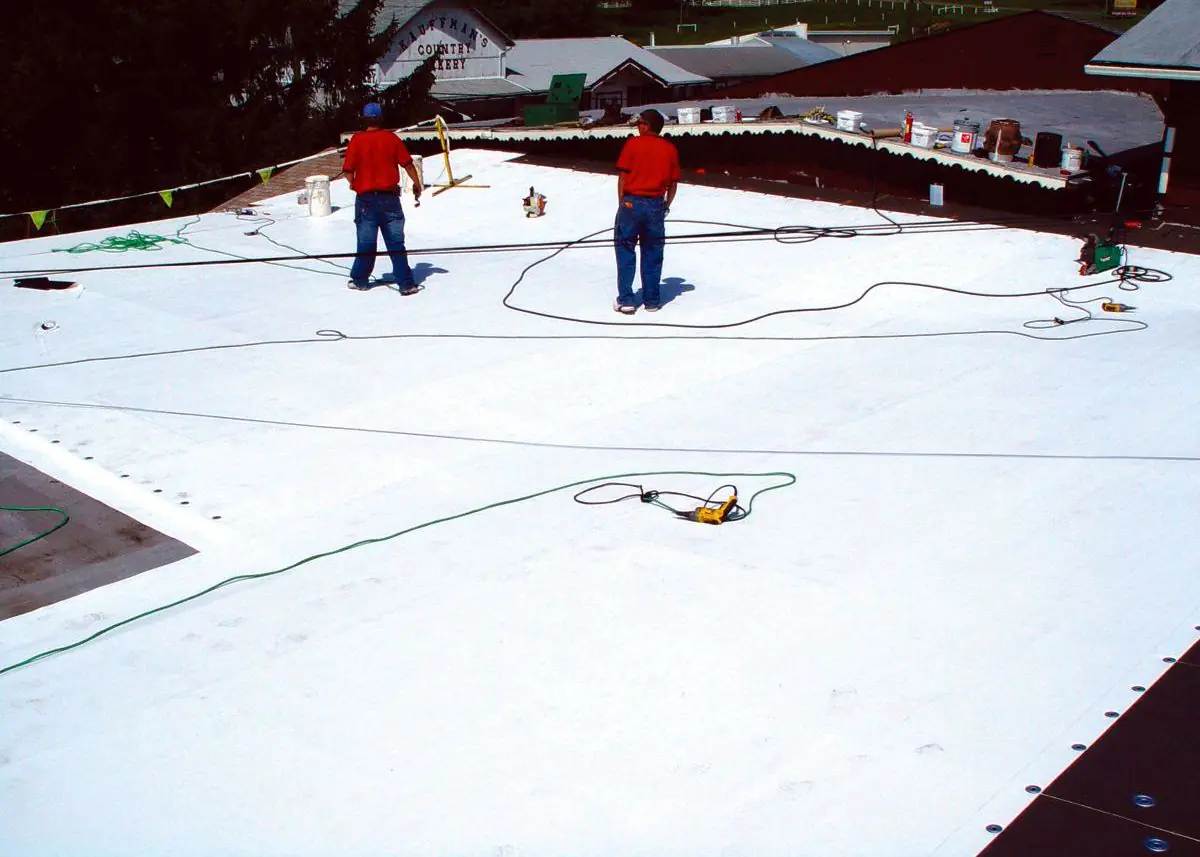
“How much does a roof coating cost?” is usually the first question a building owner asks, and it is a fair one. The honest answer is that it depends on your roof, and two roofs of the same size can end up with very different prices.
That isn’t a dodge. Most of the cost of a coating project is in what happens before the coating goes on, and that varies from roof to roof. This article explains the factors that set the price, so you can understand a proposal, compare proposals fairly, and spot one that leaves out something important.
Why We Don’t Publish a Price per Square Foot
A per-square-foot price only works when every roof needs the same work. Coating projects don’t. One roof might need a wash, a primer, and the coating. Another the same size might need hundreds of square feet of wet insulation replaced, dozens of seams reinforced, and new flashing around every rooftop unit before any coating can go on.
A low number given without looking at the roof usually means one of two things: the price will change once work starts, or the preparation will be skipped. Neither is good for you.
1. The Size and Shape of the Roof
Size matters, but shape and detail often matter as much. A wide-open roof with few penetrations is straightforward to prepare and coat. A roof covered with HVAC units, vents, pipes, skylights, curbs, and parapet walls (the short walls around the edge of many flat roofs) needs much more hand work, because every one of those details has to be sealed properly. Most leaks start at details like these, so they deserve the extra time.
2. The Condition of the Existing Roof
A coating renews the surface of a roof that is still basically sound. Before it goes on, the problems already there have to be fixed. That can include open seams, splits, blisters, loose flashing, damaged drains, and old patches that have failed. The more of this a roof has, the more labor and material the job takes before coating starts.
3. Moisture in the Roof
Wet insulation is the single biggest swing factor in the cost of a coating project. Water that gets through the roof spreads into the insulation underneath, and a coating can’t go over it, because it would seal the water in.
Before we recommend a coating, we check the roof for moisture. Wet sections are cut out and replaced with dry insulation and new roofing before coating. A roof with a few small wet areas costs far less to prepare than one where water has been spreading for years.
If a proposal doesn’t mention moisture at all, ask how wet areas will be found and what happens to them.
4. Cleaning and Surface Preparation
Coatings bond to clean, sound surfaces. Preparation usually starts with a thorough power wash to remove dirt, chalking, and loose material. Depending on the roof, it may also include removing loose gravel or failed coatings and applying a primer made for that surface. Single-ply membranes, modified bitumen, built-up roofs, metal, and spray foam each need their own preparation. Good preparation is not glamorous, but it is the difference between a coating that holds and one that peels.
5. The Coating System and Its Thickness
A coating system is more than a single coat of paint. It typically includes base and top coats, and often reinforcing fabric set into the coating at seams or across the whole roof. Fabric adds strength and helps the coating bridge seams and small cracks.
Thickness is measured in mils (thousandths of an inch) and checked as the coating is applied. A thicker system uses more material and takes more labor, and it generally holds up better over time. When you compare proposals, look at the specified thickness and whether fabric is included, and where. Two proposals that both say “coating” may describe very different roofs.
At Shield Roofs, we install Conklin acrylic coating systems. You can read more about them on our commercial roof coatings page.
6. The Warranty Term
Longer warranty terms usually require a thicker system and more specific preparation. That adds to the cost, and it also adds to what you get.
Depending on the system, Shield Roofs can offer up to a 20-year material warranty backed by Conklin Roofing Systems, with maintenance plans available.
Warranty terms vary by system and project; ask for details.
When you compare warranties, ask who backs the warranty, what it covers (material, labor, or both), and what you need to do to keep it in effect.
7. Access, Height, and Working Around Your Business
Getting material and equipment onto the roof affects cost. A one-story building with open ground beside it is simple. A taller building, a tight downtown lot, or a roof that needs a lift or a crane takes more planning and equipment.
Your operations matter too. Work may need to be scheduled around loading docks, customer hours, air intakes, or parked vehicles that could be affected by overspray. These are all solvable, and a good proposal accounts for them up front instead of surprising you later.
8. Timing and the Upstate New York Season
Coatings need a dry roof and mild temperatures to cure properly, so in Upstate New York, coating work is scheduled for the warmer months. Our winters, with their snow and freeze-thaw cycles, also tend to make existing problems worse, so a roof that needs only minor repairs this year may need more next year.
Planning ahead helps. An inspection in the fall or winter gives you a written proposal to budget around and a place on the schedule before the coating season opens.
How Coating Compares With Replacing the Roof
For a roof that qualifies, coating usually costs less up front than a full tear-off and replacement, because you aren’t paying to remove the old roof and haul it away. There is also less disruption, since the roof stays on and the building stays covered.
General industry ranges for illustration only. Your free inspection gives you real numbers for your building.
A white coating also reflects more of the sun’s heat than a dark or weathered roof.
Reflective roof coatings may help reduce cooling costs. Actual savings depend on the building, climate, and existing roof.
Not every roof qualifies. If yours has widespread wet insulation or a failing deck, a coating is the wrong investment. Our article Restore, Recover or Replace? explains how to tell the difference.
How to Compare Coating Proposals
When proposals come in, line them up against these questions:
- Was the roof checked for moisture, and does the proposal say how wet areas will be handled?
- What repairs are included before coating?
- How will the roof be cleaned and primed?
- What coating system is specified, at what thickness, and is fabric included?
- What warranty comes with it, who backs it, and what does it cover?
- What is excluded?
The lowest number isn’t the better deal if it leaves out the work that makes a coating last.
Getting Real Numbers for Your Roof
The only way to get a real price is to look at the roof. Our free inspection covers the whole roof surface, the seams, flashing, drains, and penetrations, with photos of every problem area. Within 24 to 72 hours, you get a written proposal that explains what we found and what each option would cost.
If your building has a metal roof, our article on whether to coat or re-sheet a rusty metal roof covers the questions that apply to metal.
Our service
- Commercial Roof CoatingsA seamless Conklin acrylic coating that seals the surface and reflects sunlight.
Related article
- Rusty Metal Roof on Your Warehouse? Coat It or Re-Sheet ItHow to tell whether a rusting metal roof can be restored or needs new panels.