If your flat roof has been patched more than once, you have probably heard three different words from three different people: restore, recover, and replace. Each one can be the right answer. Each one can also be the wrong answer, and an expensive one, if it is chosen for the wrong roof.
This guide explains what each option means, how to tell which one fits your building, and what to ask before you sign anything. It is written for owners and managers of warehouses, plants, shops, offices, churches, and other commercial buildings across the Mohawk Valley.
The Three Options in Plain Language
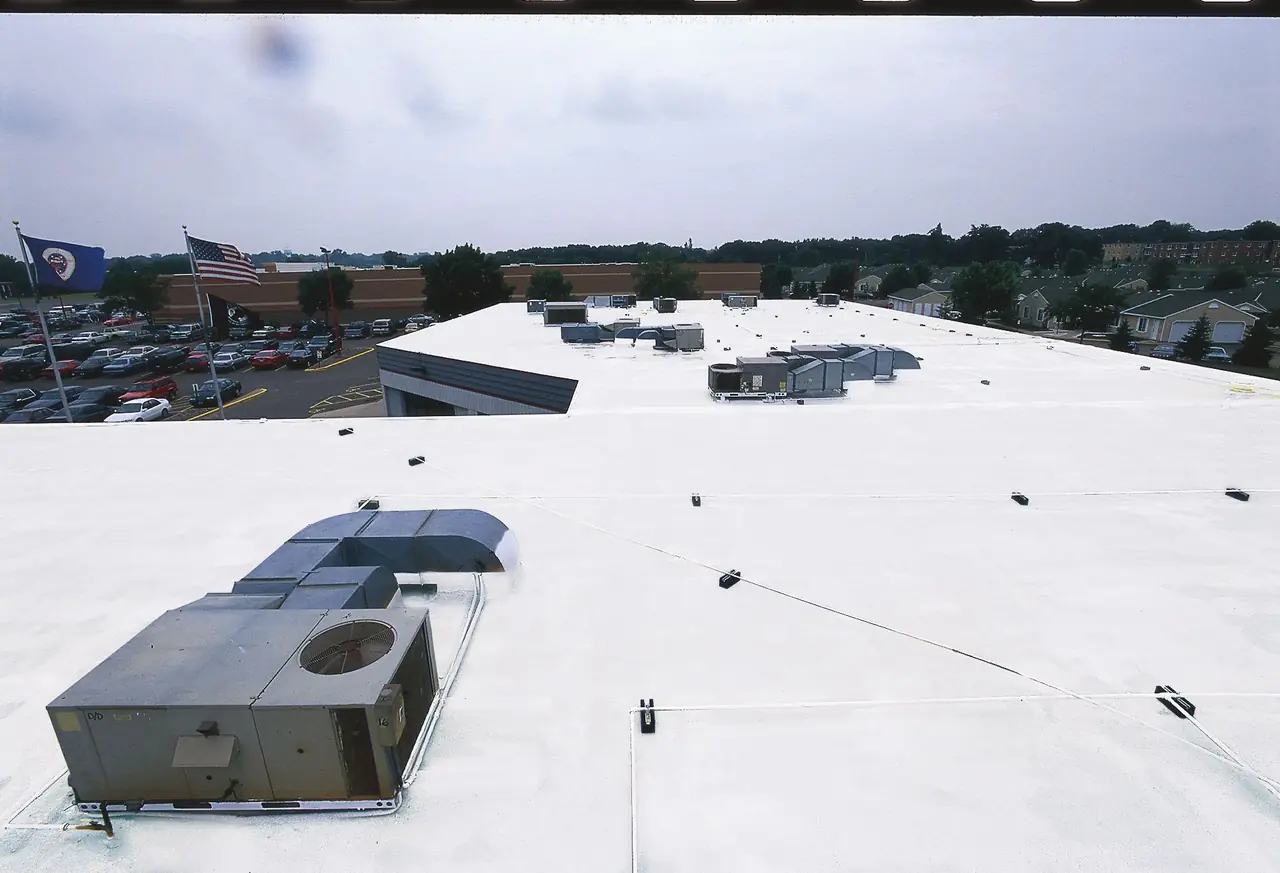
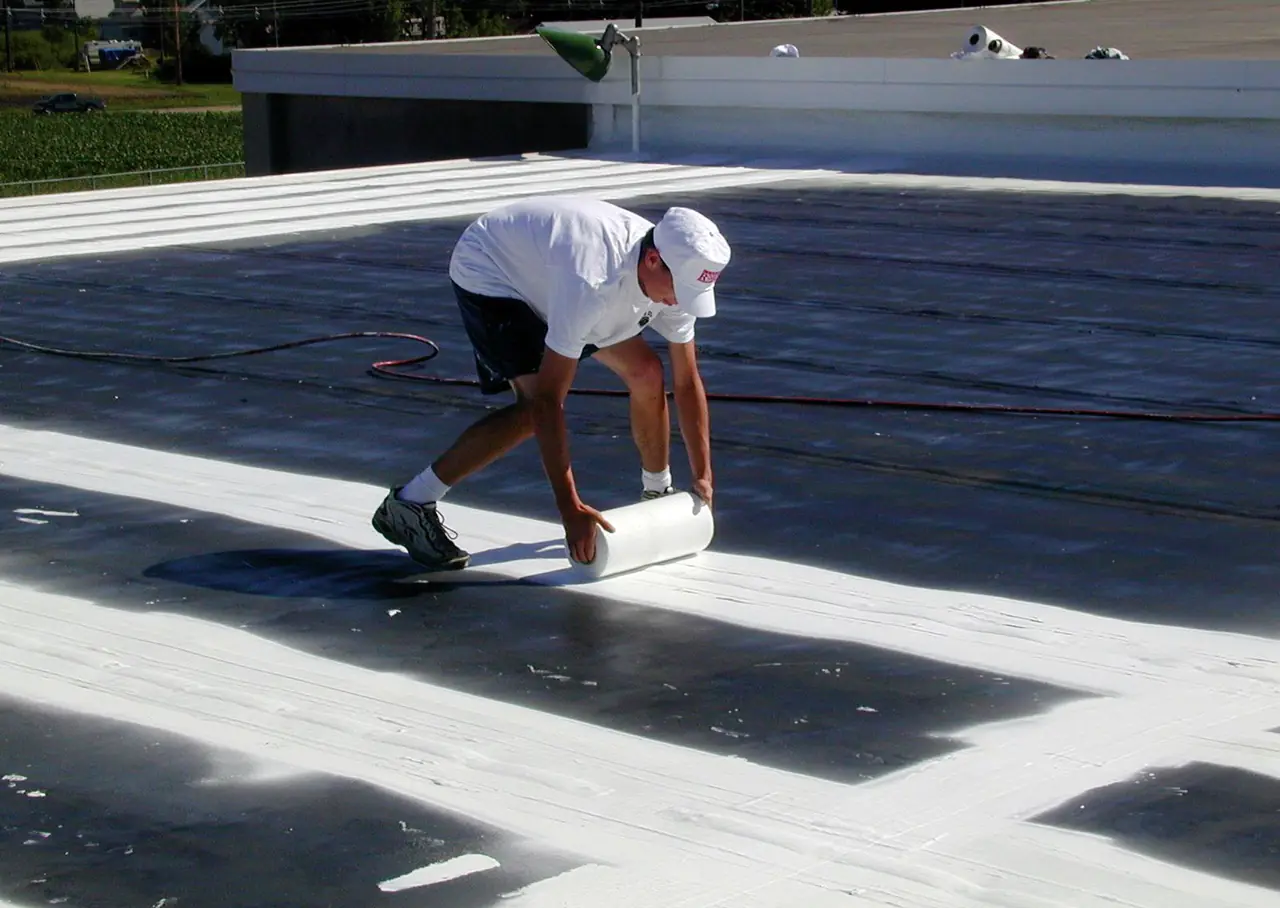
Restoration keeps your existing roof in place and renews its surface. The roof is cleaned, damaged areas are repaired, wet sections are cut out and replaced, and a liquid coating system is applied over the whole roof. On many roofs, a polyester fabric is set into the coating at seams or across the entire surface for extra strength. The result is one continuous, seamless layer over the roof you already have.
A recover installs a new roof system over the existing one, usually with new insulation board in between. A common example is a new single-ply membrane, such as TPO or PVC, laid over an old roof that is dry but worn out. The old roof stays where it is, underneath.
Replacement removes everything down to the roof deck (the structural layer of steel, wood, or concrete that the roof sits on). Damaged deck is repaired, and a completely new roof is installed, including new insulation.
All three can solve a leaking roof. What separates them is what is going on under the surface.
Start With What You Can’t See
The most important question about any flat roof is whether the insulation underneath is dry. Water that gets through the membrane soaks into the insulation and spreads. Wet insulation stops insulating well, adds weight, and can damage the deck over time.
Wet insulation also decides what is possible. A coating or a new roof laid over wet insulation seals the water in, and the problem keeps growing under your new surface. That is why any honest recommendation starts with a moisture check, not a sales pitch. On our inspections, that can include a moisture meter and core samples, which are small plugs cut from the roof so we can see every layer.
If a contractor recommends a coating or a recover without checking for moisture, ask why.
When Restoration Makes Sense
Restoration is often a good fit when:
- The roof deck is solid.
- Most of the insulation is dry, and any wet areas are limited enough to cut out and replace.
- The problems are concentrated at seams, flashing, drains, and penetrations (the pipes, vents, and units that pass through the roof), or the surface is simply weathered.
- You want to keep the building open and avoid the noise, debris, and open deck that come with a tear-off.
For a roof that qualifies, restoration usually means less disruption and less waste, because the existing roof isn’t torn off and hauled away. A restored roof can also be cleaned and recoated later, which can put off the next major roof project.
A restoration coating can extend the service life of a sound roof. Results depend on the roof’s condition, the system used, and maintenance.
When Restoration Is the Wrong Call
This is the part some contractors skip. Restoration is the wrong choice when:
- Large areas of the insulation are wet.
- The deck is rusted, rotted, or sagging.
- The membrane is failing across the whole roof, splitting, shrinking, or pulling away almost everywhere, not just in a few places.
- The roof has drainage or structural problems that need to be rebuilt, not covered.
Coating a roof like this doesn’t fix it. It postpones the problem and spends money that should have gone toward a lasting roof. If your roof is in this condition, you deserve to hear it plainly, with the photos and moisture results that show why.
When a Recover Fits
A recover sits between the other two options. It can make sense when the existing roof is dry and sound enough to serve as a base, but its surface is too worn for a coating to be a good investment.
There are limits. Building codes restrict how many roofs can be stacked on one building, so if your building already has two roofs, the old layers generally have to come off. A recover also adds weight and hides whatever is underneath, so the condition of the existing roof has to be checked carefully first.
Knowing how many layers are already on your building matters more than most owners realize. Here’s an example from our own experience. On one tear-off, the owner had been told by the previous contractor that there was a single layer of old roofing under the last job. When the roof came off, there were four. Nobody had told the owner the truth about what was up there. Before you agree to any recover, ask how many roofs are on the building now, and ask how the contractor knows.
When Replacement Is the Right Answer
Replacement is the right call when the deck, the insulation, or the membrane has failed across much of the roof, or when the building already has as many roof layers as it can carry. It is the most disruptive and usually the most costly of the three options, but on the right roof it is the only answer that lasts.
A replacement also gives you a fresh start. The deck can be repaired, the insulation can be brought up to date, and drainage problems can be corrected while the roof is open. If replacement is where you’re headed, our page on commercial roof replacement explains how we plan a tear-off around a working building.
What the Mohawk Valley Climate Adds to the Decision
Roofs here face long winters, heavy snow, and many freeze-thaw cycles. Water that sits in a low spot or works into a seam freezes, expands, and opens the gap a little further each time. Ponding water and failing flashing tend to get worse quickly in this climate, so a roof that is borderline today may not be borderline in two winters.
The weather also affects timing. Coatings need a dry surface and mild temperatures, so restoration work is scheduled for the warmer months. Inspections and many repairs can happen year-round. Having your roof inspected in the fall or winter gives you time to understand your options and plan your budget before the coating season begins.
Questions to Ask Before You Decide
Whoever you talk to, these questions will tell you a lot:
- Did you check the roof for moisture, and can I see the results?
- How many roofs are on my building now?
- What happens to the wet areas you found?
- Why is this option right for my roof, and when would you recommend something else?
- What does the warranty cover, and what do I need to do to keep it in effect?
- How will the work affect my tenants, employees, or customers, and for how long?
A contractor who answers these clearly, with photos, is one you can work with.
How We Help You Decide
At Shield Roofs, the free inspection is where the decision starts. We walk the whole roof, check the seams, flashing, drains, and penetrations, and photograph the problem areas. Within 24 to 72 hours, you get a written proposal that lays out your options in plain language. If restoration fits, we’ll say so. If it doesn’t, we’ll tell you that too, and explain what would.
You can read more about our commercial roof restoration process, including the fabric-reinforced systems we install. If cost is your next question, our article on what drives the cost of a commercial roof coating walks through the factors that set the price.
Our service
- Commercial Roof RestorationRenew a worn but sound roof in place and put off a full tear-off.
Related article
- What Drives the Cost of a Commercial Roof Coating in Upstate NYThe factors that move the price of a coating project, explained without sales talk.