
Spray Foam Roofing for Commercial Buildings
One Seamless Layer Over Every Curb, Pipe and Edge.
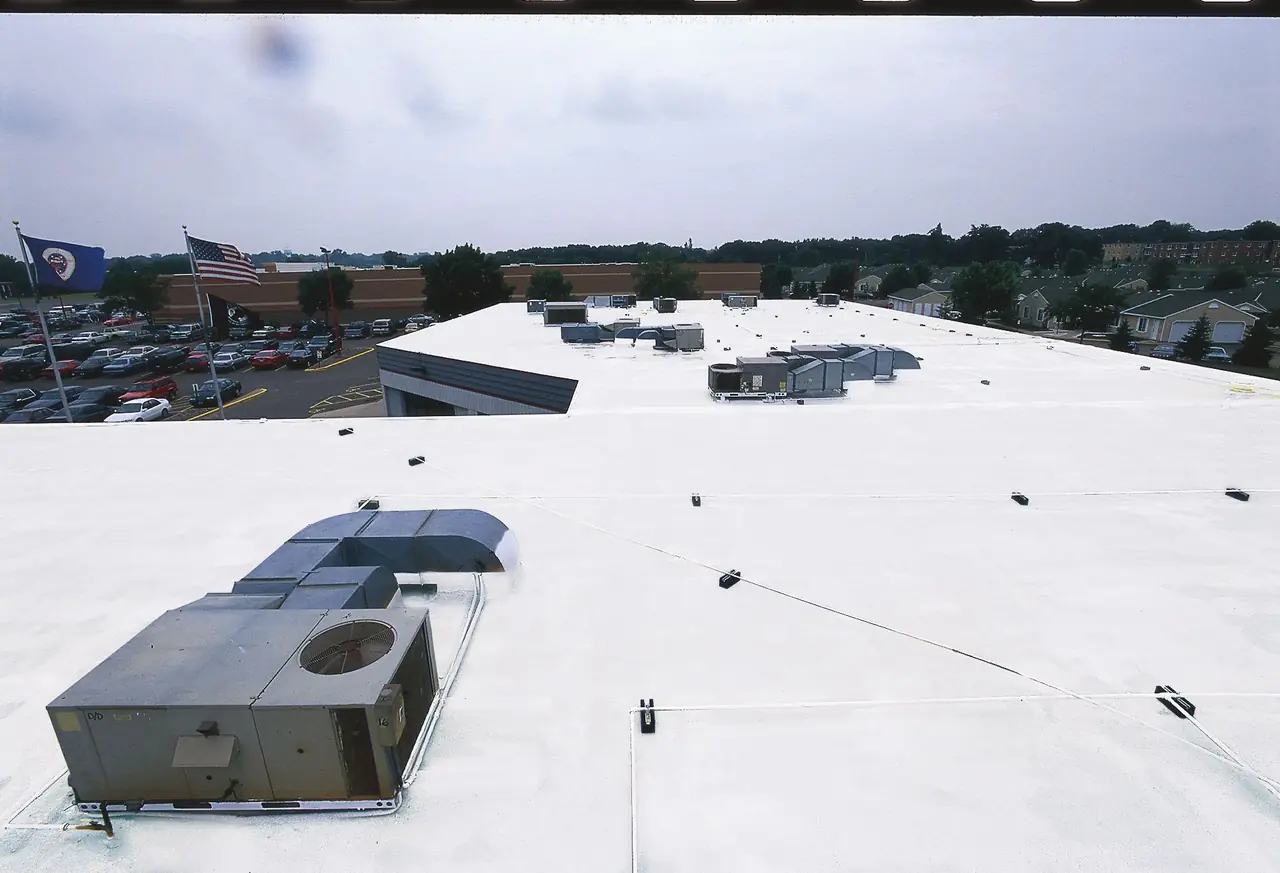
Roofs crowded with rooftop units, pipes, and odd angles have hundreds of joints where leaks begin. Spray polyurethane foam (SPF) covers them all in one continuous layer that also adds insulation.
Free Roof Inspection
Tell Us About Your Building
No obligation. You get photos and a written proposal with your options.
The basics
How SPF Roofing Works
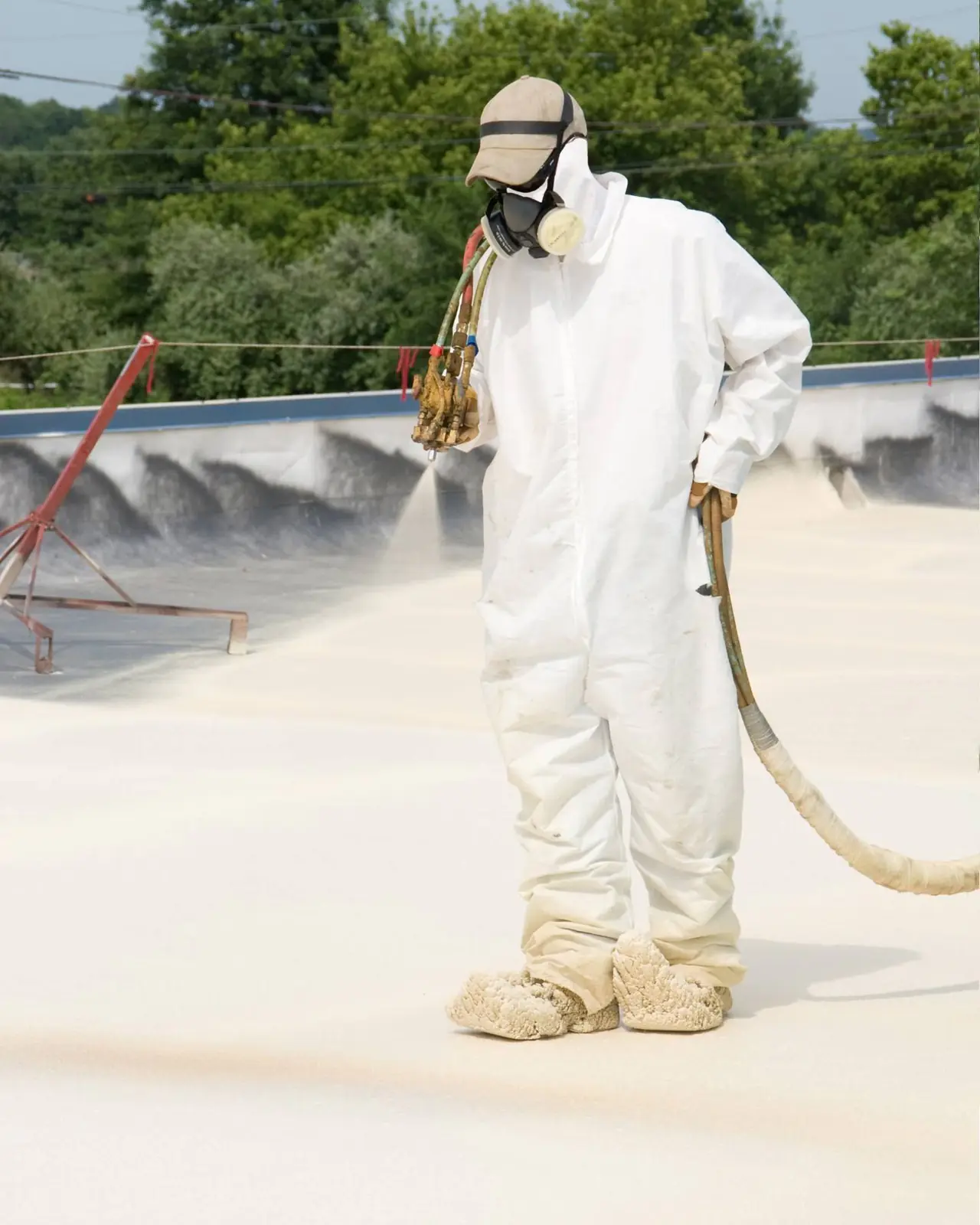
SPF is sprayed on as a liquid, expands into a rigid foam within seconds, and bonds to the roof below. Then it is coated for protection.
Because the foam is sprayed in place, it has no seams. It flows up and around curbs, drains, and penetrations, and it fills small gaps and low areas as it rises. The crew can also build the foam up thicker in places to add slope, which helps water drain toward the drains instead of pooling.
Closed-cell roofing foam is also an insulator. Adding a layer of it on top of the roof may make the building easier to keep warm in a Mohawk Valley winter and cooler in summer, especially on older buildings with little insulation.
Reflective roof coatings may help reduce cooling costs. Actual savings depend on the building, climate, and existing roof. Any heating benefit from added foam insulation also depends on the foam thickness and how the building is used.
How a foam roof is installed
Inspect the roof
We walk the roof, check its condition, and talk with you about what you need from it.
Put it in writing
You get a written proposal with your options and the scope of the work.
Install it the right way
We follow the manufacturer's recommended installation guides and industry best practices on every job.
Honest answers
Where SPF Fits (and Where It Doesn't)
Foam is an excellent system on the right building and the wrong choice on others. Here is how we tell them apart.
SPF is a strong fit for
- Roofs with many penetrations, rooftop units, or an irregular shape.
- Older buildings that need more insulation and better drainage.
- Metal roofs where you want to stop leaks and add insulation at the same time.
- Roofs that can be recovered rather than torn off, because the existing roof is dry and secure.
SPF is usually not the right choice when
- The existing roof is widely wet, and a tear-off is needed anyway.
- Spraying can't be done safely near the site, for example beside a busy lot full of cars or a neighbor's building in steady wind.
- The roof gets heavy, constant foot traffic that the coating can't be protected from.
- A simple single-ply roof would meet your needs for less, which we'll tell you if it's true.
Long-term care
Coating and Maintaining a Foam Roof
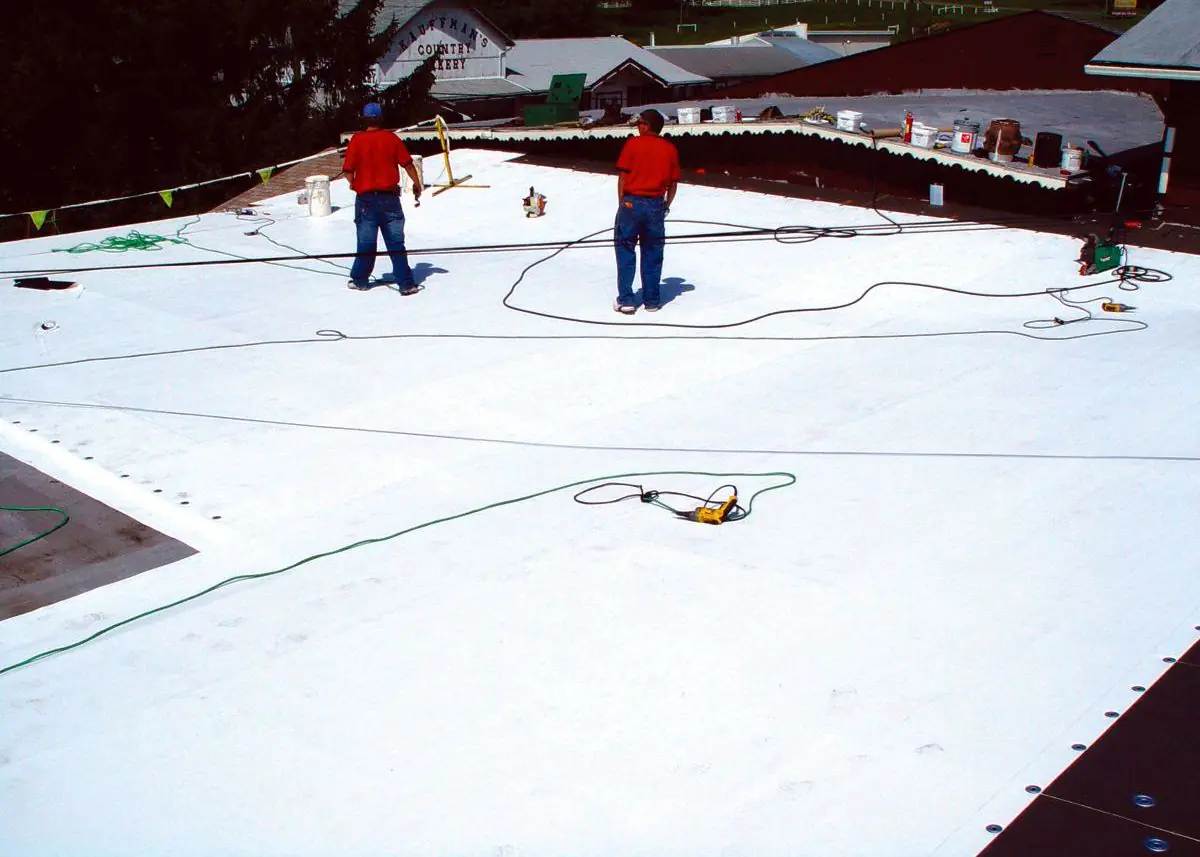
The foam provides the insulation and the seamless body of the roof. The coating on top protects the foam from sunlight and weather. Keeping that coating in good shape is what keeps a foam roof working.
We coat foam roofs with Conklin coating systems, applied at the thickness the system calls for. Over the years, the top coat slowly wears. Instead of replacing the roof, the surface is cleaned and recoated, and the foam underneath keeps doing its job.
A foam roof should be checked at least once a year and after hailstorms. The things to look for are worn spots in the coating, small punctures, and damage around rooftop equipment. Our roof inspection and maintenance programs can take care of those checks for you.
Depending on the system, a coated foam roof can come with up to a 20-year material warranty backed by Conklin Roofing Systems, with maintenance plans available.
Warranty terms vary by system and project; ask for details.
Questions
SPF FAQs
What is spray foam roofing made of?
Spray polyurethane foam, or SPF, is made by mixing two liquid components at the spray gun. They react and expand within seconds into a rigid foam that bonds to the roof below it. Once the foam has been sprayed to the planned thickness, it is covered with a protective coating, because foam left bare breaks down in sunlight.
Can spray foam go over my existing roof?
Often, yes. Foam can be sprayed over many existing metal, built-up, and single-ply roofs, as long as the roof below is dry and securely attached. Any wet insulation has to be removed first, so we check the roof for moisture before recommending foam.
Can you walk on a spray foam roof?
Yes. A coated foam roof is firm enough for normal maintenance foot traffic. Areas that see regular traffic, such as paths to rooftop units, can be given extra protection so the coating isn't worn through.
What happens if a foam roof gets damaged?
Small punctures from dropped tools or hail are usually simple to repair. The damaged foam is cut out, filled, and recoated. Catching damage early during a routine inspection keeps the repair small, because water can't get far into closed-cell foam.
Service area
Where We Offer Spray Foam Roofing
We're based in Fort Plain, NY, and serve commercial buildings within about 100 miles, and farther when a job calls for it.
Related services
- Commercial Roof CoatingsA seamless Conklin acrylic coating that seals the surface and reflects sunlight.
- TPO & PVC RoofingA new single-ply roof with heat-welded seams.
- Commercial Roof ReplacementA complete tear-off and new roof when restoration is not the right fit.
Your next step
Get a Free SPF Assessment
We'll look at your roof, check it for moisture, and tell you whether spray foam is a good fit or whether another system would serve you better. You'll get photos and a written proposal within 24 to 72 hours of the inspection.
Call or text (518) 612-0001. We respond within 24 to 48 hours.