Drive through the Mohawk Valley and you’ll see metal roofs everywhere: on warehouses, manufacturing plants, shops, storage buildings, and farm buildings. Many of them are decades old. Sooner or later, the owner notices rust streaks, drips along a line of screws, or a stain spreading across the ceiling, and starts wondering whether the whole roof has to be replaced.
Usually there are two realistic choices. You can restore the roof by treating the rust, sealing it, and coating it in place, or you can re-sheet it by taking off the old panels and putting new ones on. This article explains how to tell which one your roof needs.
What the Two Options Mean
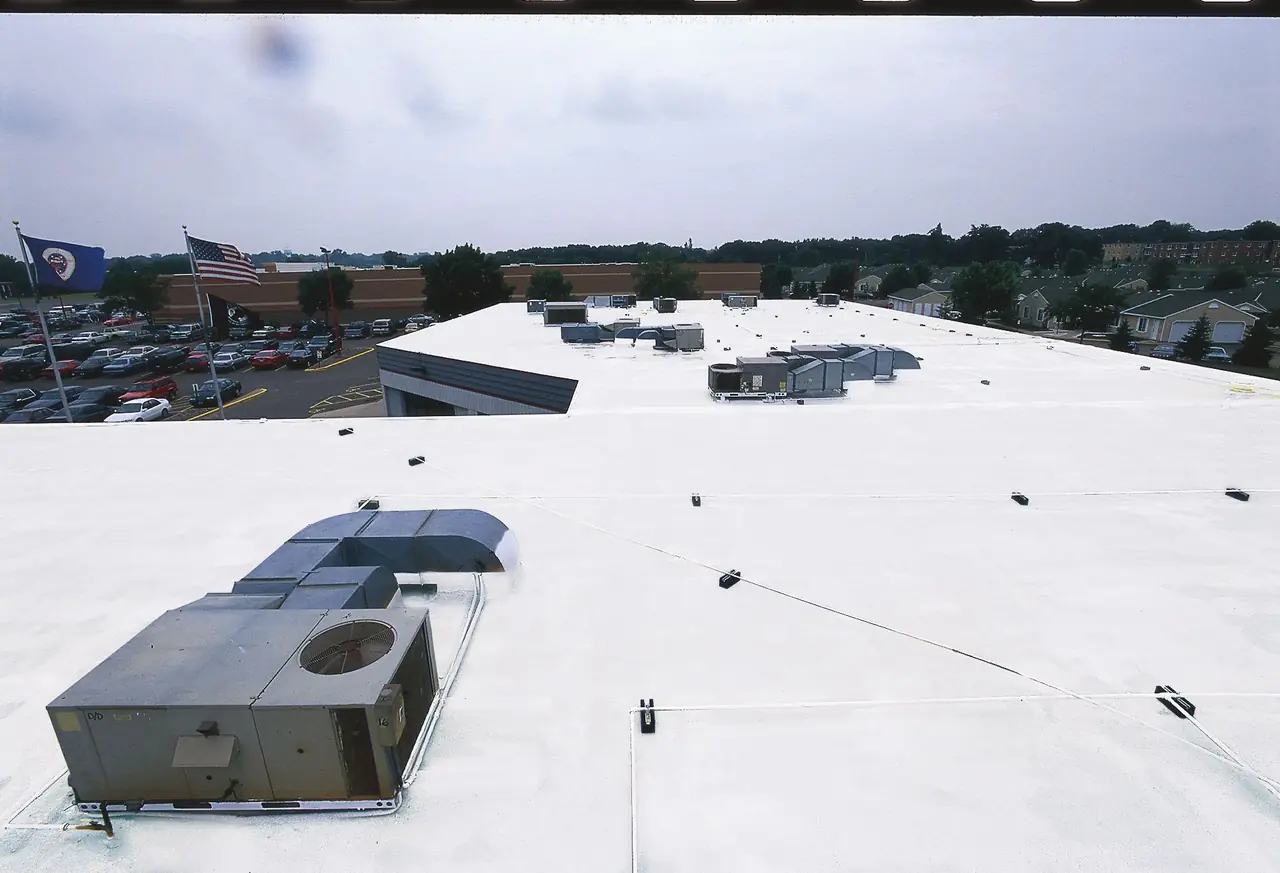
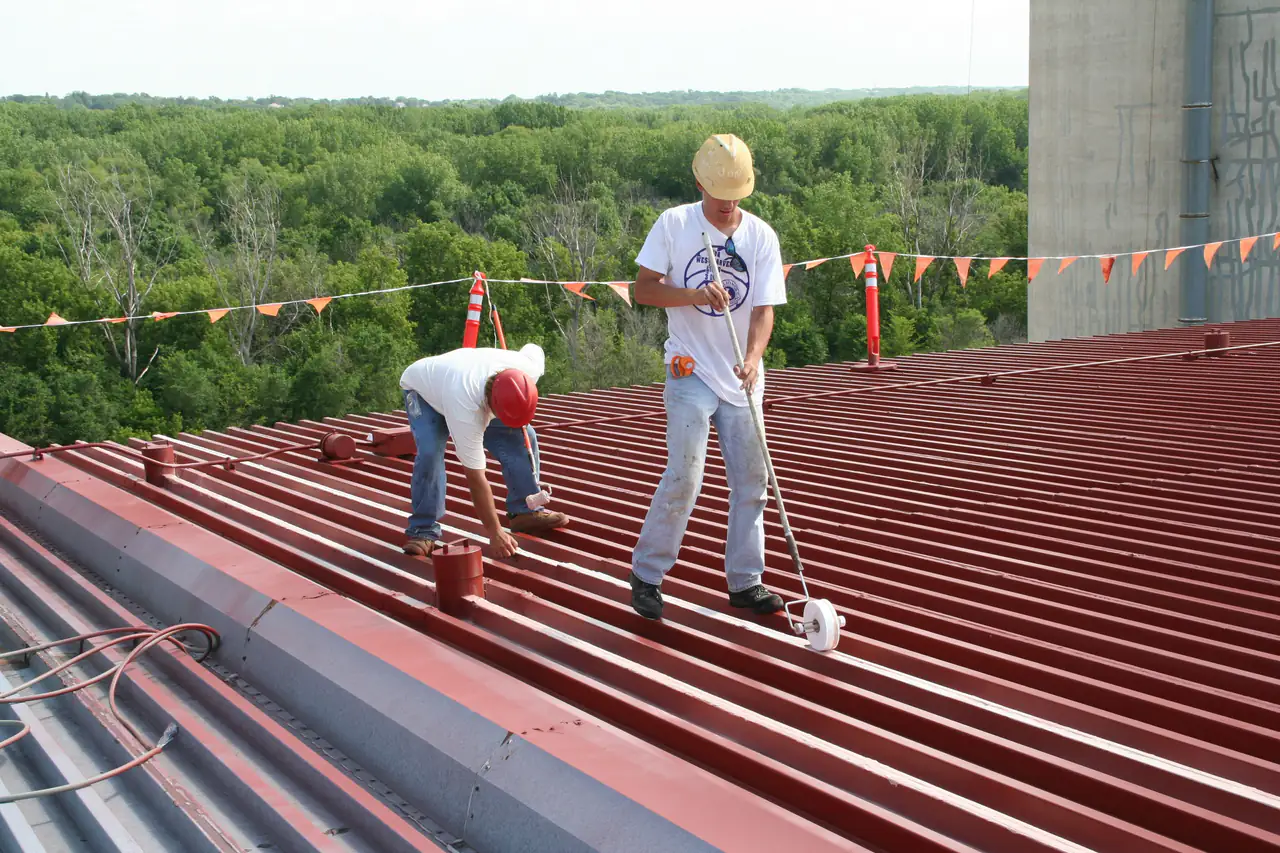
Restoration keeps the existing panels on the building. The roof is power washed, rust is treated with a rust-inhibiting primer, loose or failed screws are tightened or replaced, and the seams and laps (where panels overlap) are sealed and reinforced. Then the whole roof is coated, forming one continuous membrane over the metal. The building stays covered the entire time.
Re-sheeting removes the old metal panels and installs new ones, usually with new fasteners, trim, and flashing. It replaces the roof surface completely. Because the roof is opened up in sections, the work has to be planned around the weather and whatever is stored or happening inside the building.
Both can stop leaks. The right choice depends mostly on one thing: how much strength the metal has left.
Start by Judging the Rust
Not all rust is the same, and the difference matters.
- Surface rust looks like orange or brown discoloration, sometimes with light flaking. The metal underneath is still solid. This is the most common condition we see, and it is exactly what restoration is designed for.
- Heavier scale and pitting means the rust has started to eat into the metal. It often shows up along panel laps, at the eaves, and around fasteners, where water sits longest. Panels in this condition can often still be restored, but they need a close look.
- Rust-through means there are holes in the panels. A simple test is to stand inside the building on a sunny day with the lights off. If you can see daylight through the roof, those panels are rusted through.
Please don’t walk on a rusting metal roof to check it yourself. Weak panels can give way without warning. Looking from inside, or from a ladder at the eave, is much safer. A professional inspection covers the rest.
Look at Where It Leaks
On most exposed-fastener metal roofs, the leaks don’t come from the panels at all. They come from the joints.
The screws that hold the panels down have rubber washers under their heads. Every day, the panels expand in the heat and shrink in the cold, and over the years the washers dry out, crack, and loosen. Some screws back out entirely. Each one becomes a small hole. Seams and end laps open up the same way, and wind can push water sideways through gaps you can barely see.
If your leaks follow lines of screws or panel seams, that is good news. Fasteners and seams are exactly what a restoration fixes.
When Coating Makes Sense
A metal roof is usually a good candidate for restoration when:
- The panels are solid, with surface rust or limited scale.
- The leaks come from fasteners, seams, ridge caps, and flashing.
- Any rust-through is limited to a small number of panels.
- You want to avoid opening the roof over your equipment, inventory, or operations.
A restoration seals the fasteners and seams, stops the rust from spreading, and puts a new protective surface over the whole roof. The panels stay put, so there is far less waste and much less disruption than removing them.
A restoration coating can extend the service life of a sound roof. Results depend on the roof’s condition, the system used, and maintenance.
At Shield Roofs, we restore metal roofs with Conklin metal roof systems, which combine a primer made for metal, seam and fastener treatments, and a flexible acrylic coating that moves with the panels through summer heat and winter cold. You can see each step on our metal roof restoration page.
When Re-Sheeting Is the Better Answer
Coating can’t put strength back into metal that has lost it. Re-sheeting is the better answer when:
- Rust has eaten through large areas of the roof, not just a few panels.
- The metal flakes apart or bends easily when pressed.
- Panels are badly buckled, torn, or bent from storms or snow.
- The structure under the panels, such as the purlins (the horizontal framing members the panels are fastened to), needs repair that requires opening the roof.
There is also a middle ground. When only a few panels are rusted through, those panels can sometimes be replaced and the rest of the roof restored. Whether that makes sense depends on how many panels are affected and on the condition of the rest of the roof.
Comparing Disruption and Cost
Restoration generally costs less up front and disrupts less than re-sheeting, because nothing is removed, the building stays covered, and there is no old metal to haul away. Re-sheeting involves more material, more labor, and more planning around weather and the building’s use.
General industry ranges for illustration only. Your free inspection gives you real numbers for your building.
Re-sheeting does have its own advantages when the roof truly needs it. You get brand-new panels, and with the roof open, problems in the framing or insulation underneath can be addressed at the same time. The goal is to spend money on the option your roof actually needs, no more and no less.
What Upstate Winters Do to Metal Roofs
Metal roofs in this region work hard. Large swings in temperature make the panels expand and contract more often, which loosens fasteners and opens seams faster. Snow and ice sit along the eaves and in gutters, where rust tends to start, and meltwater refreezing at the edges can force its way under laps.
Coating work needs dry weather and mild temperatures, so it is scheduled for the warmer months. A fall or winter inspection lets you find out what your roof needs and get on the schedule early.
Questions to Ask About Your Metal Roof
- Is the rust on the surface, or has it gone through the metal? Can you show me with photos?
- Where exactly are the leaks coming from?
- How will the fasteners and seams be handled?
- How many panels, if any, need to be replaced?
- What coating system will be used, and what warranty comes with it?
Find Out What Your Roof Needs
Our free inspection includes a walk of the full roof, a check of the seams, flashing, drains, and penetrations, and photos of every problem area. Within 24 to 72 hours, you get a written proposal with your options.
If your metal roof can be restored, we’ll show you how. If it is past restoring, we’ll tell you, show you the photos that prove it, and explain what that means for your building. For a broader look at the same decision on flat roofs, read Restore, Recover or Replace? How Mohawk Valley Building Owners Should Decide.
Our service
- Metal Roof RestorationSeams and fasteners sealed and the panels coated, without re-sheeting the roof.
Related article
- Restore, Recover or Replace? How Mohawk Valley Building Owners Should DecideAn honest guide to the three options, including when restoration is the wrong call.